Anúncios
There’s an old secret hidden in every loop of yarn, waiting for curious hands to unravel it. 🧵
Crochet looks simple from a distance, almost silent, almost harmless. But once you start pulling that first thread, something shifts — patience becomes obsession, and a hook becomes a tool of quiet transformation.
Anúncios
This guide walks you through everything you need to learn crochet for free, from the first chain stitch to patterns that once seemed impossible. No hidden costs, no locked lessons — just the craft, stripped down to its bones.
Why Crochet Still Haunts Modern Crafters
Crochet has survived centuries of trends, wars, and fashion cycles. It refuses to disappear. Unlike knitting, which uses two needles, crochet relies on a single hook, making it faster to learn and easier to correct mistakes.
According to craft industry surveys, searches for “learn crochet” have grown steadily since 2020, with a notable spike during periods of isolation — when people needed something to occupy restless hands and distracted minds.
There’s a psychological pull to repetitive stitching. Studies on repetitive motion crafts, including crochet, link the activity to reduced cortisol levels and a meditative state similar to mindfulness practice. The rhythm becomes almost hypnotic.
The Tools Hiding in Plain Sight
Before any stitch exists, you need the right instruments. Crochet doesn’t demand much, but precision matters.
- Crochet hook — sizes range from 2.25mm (steel, for lace) to 15mm (jumbo, for chunky blankets).
- Yarn — acrylic is forgiving for beginners; cotton suits dishcloths and amigurumi.
- Scissors — small, sharp, and dedicated only to yarn.
- Yarn needle — for weaving in ends so your work doesn’t unravel in silence, days later.
- Stitch markers — cheap plastic rings that save hours of frustration.
The First Stitches: Where the Pattern Begins
Every crochet project, no matter how complex, begins with two movements: the slip knot and the chain stitch. Master these, and the rest unfolds almost naturally.
Slip Knot and Foundation Chain
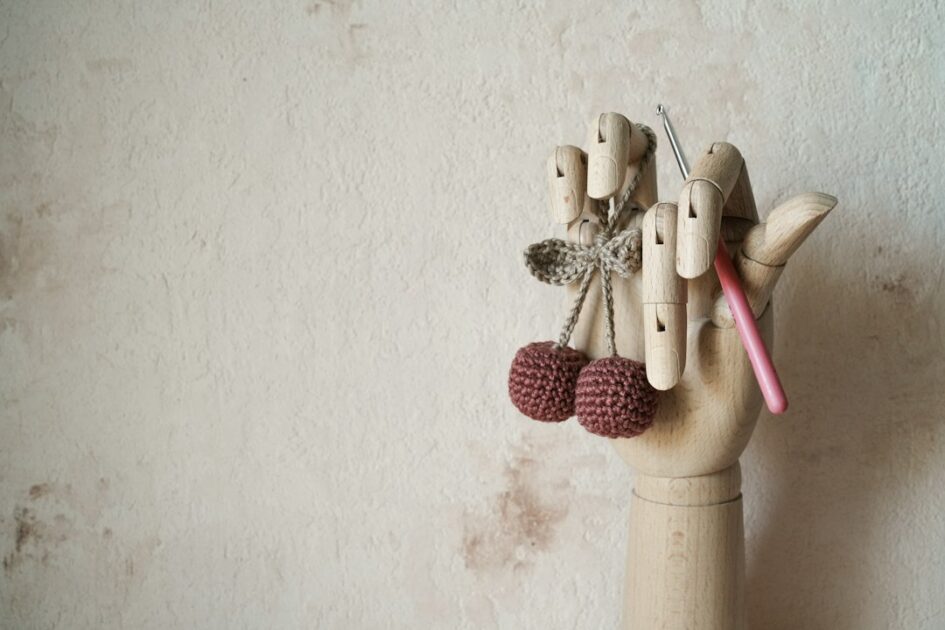
Create a loop with your yarn, pull the working thread through it, and tighten it onto your hook. That’s your slip knot — the entrance point into everything that follows.
From there, yarn over and pull through the loop repeatedly to build your foundation chain. This chain determines the width of your project, so count carefully. A miscount here echoes through every row that comes after.
Basic Stitches You Cannot Skip
Once the chain exists, four stitches form the backbone of almost every pattern:
| Stitch | Abbreviation | Height | Common Use |
|---|---|---|---|
| Single Crochet | sc | Short | Amigurumi, dense fabric |
| Half Double Crochet | hdc | Medium | Blankets, scarves |
| Double Crochet | dc | Tall | Shawls, lightweight garments |
| Treble Crochet | tr | Extra tall | Lace, decorative edges |
Beginners often rush into double crochet because it works faster, but single crochet teaches tension control — the invisible skill separating messy work from professional-looking pieces.
Free Resources That Actually Teach, Not Just Sell
The internet is crowded with crochet content, but much of it is designed to trap you into paid courses halfway through. These sources genuinely deliver full instruction at no cost.
Video Platforms Worth Your Time
Visual learning works best for crochet, since written instructions can’t always capture hand positioning or tension. Watching real hands move through a stitch removes guesswork that text alone leaves behind.
The YouTube app remains the single largest free library of crochet tutorials, with channels dedicated entirely to beginner-level stitch breakdowns, slow-motion demonstrations, and full pattern walkthroughs filmed in real time.

Search for channels that show close-up camera angles on the hook itself — this detail matters more than subscriber count or production quality.
Written Patterns and Community Forums
Beyond video, written patterns teach a different skill: reading crochet notation, which uses abbreviations like sc, dc, ch, sl st stacked into dense instructions.
Free pattern archives often include diagrams alongside text, which helps translate symbols into motion. Community forums also matter — experienced crocheters frequently answer beginner questions within hours, sometimes minutes, especially in active groups.
- Look for patterns labeled “beginner” or “easy” before attempting anything marked “intermediate.”
- Check pattern dates — older free patterns sometimes use outdated terminology (UK vs US stitch names differ completely).
- Read the entire pattern once before starting; surprises mid-row waste yarn and patience.
Common Mistakes That Sabotage Beginners
Most people don’t quit crochet because it’s too hard. They quit because small, correctable errors pile up until the project feels ruined.
Tension Problems
Holding the yarn too tightly creates stiff, curling fabric. Holding it too loosely produces holes and uneven rows. There’s no universal fix — tension is personal and improves only through repetition, usually after your fourth or fifth practice swatch.
Miscounting Stitches
Rows drift wider or narrower when stitches get skipped or doubled accidentally, especially at the edges. Using stitch markers at the beginning and end of each row catches this error before it spreads across ten more rows.
Choosing the Wrong Yarn Weight
A pattern written for worsted-weight yarn won’t translate correctly if you substitute bulky or fingering yarn without adjusting hook size. Always check the yarn weight symbol on the label — it’s numbered 0 through 7, from lace to jumbo.
| Yarn Weight Number | Category | Recommended Hook Size |
|---|---|---|
| 2 | Fine / Sport | 3.5mm – 4.5mm |
| 4 | Medium / Worsted | 5.5mm – 6.5mm |
| 5 | Bulky | 8mm – 9mm |
| 6 | Super Bulky | 9mm – 15mm |
Your First Real Project: The Granny Square
Nearly every experienced crocheter learned through the granny square — a small, flexible pattern that teaches color changes, corner construction, and row joining in one compact lesson.
It requires only chain stitches and double crochet, repeated in a specific rhythm around a center ring. Once you finish one square, you understand enough structure to attempt blankets, bags, or garments built from multiple squares sewn together.
Step-by-Step Breakdown
- Chain 4 and join with a slip stitch to form a ring.
- Chain 3 (counts as first double crochet), then work 2 more double crochets into the ring.
- Chain 2 for the corner, then 3 more double crochets into the same ring.
- Repeat this pattern three more times to complete four corners.
- Join the round with a slip stitch, then fasten off or continue to a second round for a larger square.
This single pattern, repeated in different colors, becomes the foundation for countless free tutorials online — because once you know it, almost every other square variation makes sense instantly.
Reading Crochet Symbols Without Fear
Crochet diagrams use visual symbols instead of text, which intimidates beginners at first glance but actually simplifies complex patterns once decoded.
- Chain stitch appears as a simple oval or dot.
- Single crochet looks like a small X or cross.
- Double crochet shows as a vertical line with one horizontal slash.
- Treble crochet adds a second slash across the same vertical line.
Diagrams show the entire shape of a project at once — something written instructions can’t do. Many free pattern sites now include both formats side by side, letting you cross-check your progress visually.
Keeping the Momentum After the First Project
The hardest part of learning crochet isn’t the first week. It’s the third week, when initial excitement fades and mistakes start feeling repetitive instead of educational.
Setting small, achievable goals helps maintain progress. Instead of jumping straight into a full sweater, try a sequence of projects that build complexity gradually:
- Week 1–2: Practice swatches, slip knots, basic stitches.
- Week 3–4: Granny squares, dishcloths, simple scarves.
- Week 5–6: Amigurumi basics, increasing and decreasing stitches.
- Week 7+: Garments, colorwork, lace patterns.
This structure mirrors how most free online courses sequence their lessons, even when they don’t say it explicitly. Following a similar timeline keeps frustration manageable.
Tracking Progress Without Pressure
Keep a small notebook, or even just photos, of each finished project. Comparing your first wobbly granny square to one made six months later reveals progress that’s easy to forget day by day, stitch by stitch.
Crochet rewards patience more than talent. The hands that seemed clumsy holding a hook for the first time eventually move without thinking — chain, stitch, turn, repeat — until the yarn stops feeling like a puzzle and starts feeling like a language only you fully understand.